
Jaylin Williams, the adaptable center for the Oklahoma City Thunder, is currently signed to a four-year, $8.18 million contract. This deal, originally established when he was selected as a second-round draft pick, exemplifies strategic roster construction and player growth, providing both stability for Williams and essential flexibility for the Thunder.
In the 2023-24 NBA season, Williams is expected to earn a salary of $2,000,000. While this amount may appear modest in the competitive realm of professional basketball, it signifies a meaningful investment in a promising young player and offers significant value to the team, considering his notable impact on the court.
Looking ahead, the contract includes team options for the last two years, a standard yet vital provision that influences both Williams’ immediate prospects and the Thunder’s long-term strategic planning.
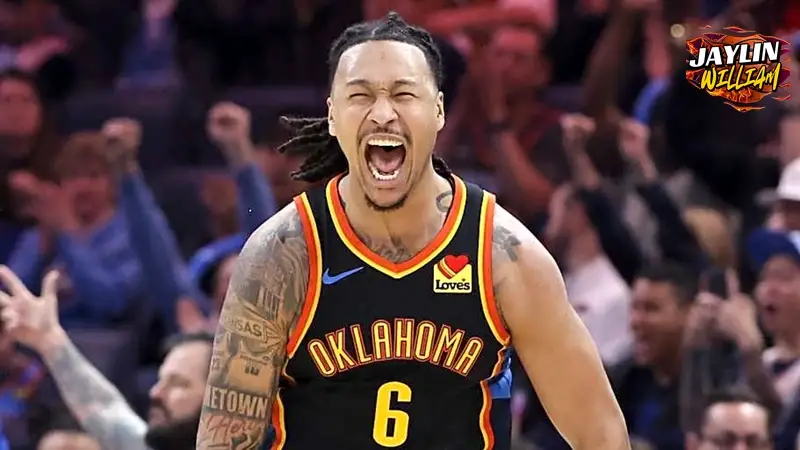
Salary Breakdown
Jaylin Williams’ contract isn’t just a number; it’s a testament to his journey from a second-round draft pick to a key rotational player, offering a structured path for his financial compensation and career progression.
Current Season’s Earnings
For the 2023-24 NBA season, Jaylin Williams’ salary stands at $2,000,000. This figure reflects a steady progression from his initial rookie year earnings and represents his contribution as a significant bench presence or occasional starter for a playoff-contending team. In the context of the NBA’s ever-inflating salary cap, this amount is often considered a highly team-friendly deal, providing the Thunder with maximum value for his production, defensive acumen, and burgeoning offensive skills. It also highlights the typical financial ramp-up for a player drafted outside the first round, where guaranteed money and year-over-year increases are strategically negotiated rather than fixed by a rookie scale.
Multi-Year Commitment
Overall, Williams’ agreement is a four-year deal valued at $8.18 million. This comprehensive package binds him to the Oklahoma City Thunder through the 2025-26 NBA season, assuming all options are exercised. Such a multi-year commitment, even if partially guaranteed, provides a young player with a foundational stability that allows them to focus on their development without the immediate pressure of a one-year “prove it” deal. For the Thunder, it locks in a promising talent at a controlled cost for a significant period, aligning perfectly with their long-term vision of building a sustainable contender largely through draft-and-develop strategies.
Long-term rookie deals and cost-controlled commitments like this are often featured in Transfer & Contract, examining how teams secure future value while fostering player stability.
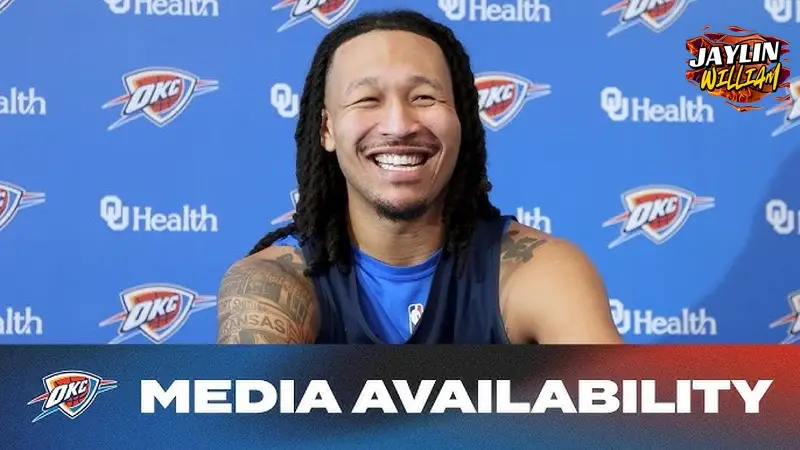
Year-by-Year Averages Growth
While the total value is $8.18 million over four years, the annual breakdown isn’t necessarily even. After his initial rookie season, his salary has seen a slight bump, reaching $2 million for 2023-24. The structure likely sees modest increases, but the more critical aspect for the future is the presence of team options. The final two years of his contract, 2024-25 and 2025-26, are both non-guaranteed team options. This means the Thunder have the unilateral right to decide whether to pick up his salary for those seasons. If they choose to exercise the option, his salary would likely continue at a similar cost-controlled rate, reflecting a previously agreed-upon figure. If they decline the option for any given year, Williams would become an unrestricted free agent. This strategic setup offers the Thunder significant flexibility, allowing them to assess his continued performance, health, and fit within their evolving roster without long-term guaranteed financial commitment beyond the initial guaranteed years.
Contractual Nuances: Beyond the Base Salary
NBA contracts are complex documents, and Jaylin Williams’ deal, while relatively straightforward for a second-round pick, still contains critical elements that define its true nature and implications.
Guaranteed vs. Non-Guaranteed Money
One of the most crucial distinctions in NBA contracts is between guaranteed and non-guaranteed money. For Jaylin Williams, his contract guaranteed him the first two years of his deal. This means regardless of performance, injury, or any other factor (short of a major disciplinary issue), he was assured of receiving his salary for those initial seasons. This security is particularly vital for a second-round pick who doesn’t benefit from the fully guaranteed, fixed-scale contracts of first-rounders. The guaranteed portion served as the Thunder’s initial investment and Williams’ financial safety net. As mentioned, the subsequent years (2024-25 and 2025-26) are non-guaranteed via team options, shifting the risk and control more towards the team.
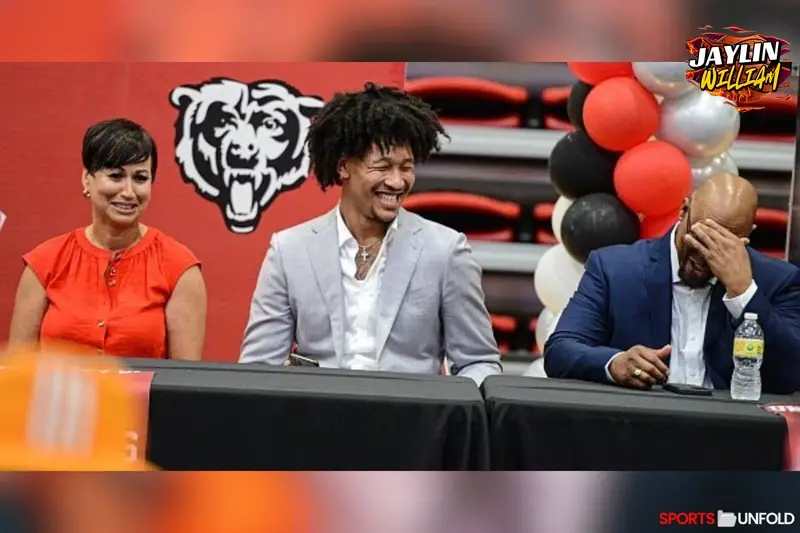
Team Options
The inclusion of team options for the 2024-25 and 2025-26 seasons is a cornerstone of Williams’ current contract. A team option grants the team the sole right to decide whether to continue the contract for that particular season. If the Thunder exercise the option, Williams remains under contract for that year at the agreed-upon salary. If they decline it, he becomes a free agent. This clause is a powerful tool for NBA front offices, providing immense flexibility to manage cap space, assess player development, and adapt to unforeseen circumstances (like injuries or trades). For Williams, it means he’s continually playing to prove his worth and justify the Thunder picking up those options, effectively making the latter half of his contract an ongoing “prove-it” period. It’s a common strategy for drafting and developing young talent, ensuring the team isn’t burdened by an underperforming player on a long-term guaranteed deal while still retaining exclusive rights to an overperforming asset.
Incentives and Bonuses
While specific details on individual incentives for Williams’ contract are not widely publicized (and generally less common for second-round rookie deals compared to superstar or veteran contracts), NBA agreements can sometimes include performance-based bonuses. These might be tied to team success (e.g., playoff appearances, winning a championship) or individual achievements (e.g., minutes played, statistical thresholds like field goal percentage or rebounds). For a player like Williams, if present, such incentives would likely be structured to reward consistent playing time, defensive metrics, or improving offensive efficiency, aligning his personal financial gains with the team’s objectives and his role development.
