

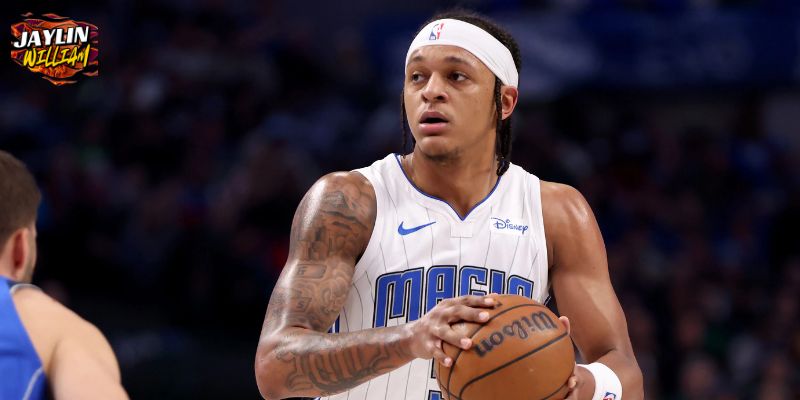
When examining talent coming into the league in recent years, the rising profiles of Jaylin Williams and Paolo Banchero stand out-though for entirely different reasons. While both are forwards drafted in 2022, their careers have taken divergent paths. This feature dives into the comparison – “Jaylin Williams vs Paolo Banchero” – to understand their skill sets, roles, stats and what each brings (and can still bring) to their respective teams.
Backgrounds and Early Career
To understand their current standing, we need to look back at how each player arrived on the professional scene.
Jaylin Williams – The undersized but high-motor role player
Jaylin Williams, a second-round pick by the Oklahoma City Thunder (34th overall in 2022) out of the Arkansas Razorbacks, has built his reputation on effort, hustle and versatility. According to his profile, he averaged 5.9 points, 5.6 rebounds and 2.6 assists in about 16.7 minutes per game during the 2024-25 season. Coming out of college he was known more for defensive impact and rebounding than scoring highlight reels.
Paolo Banchero – The franchise cornerstone
Paolo Banchero, drafted first overall by the Orlando Magic in 2022, was immediately projected as a star in the making. At 6′10″ and 250 lb, his profile promised shot-making, size, creativity and scoring ability. His 2024-25 stat line of 25.9 points, 7.5 rebounds and 4.8 assists per game underscores that role.

Statistical Comparison
Now that we’ve set the scene, let’s compare each player’s performance and production in key statistical categories.
Side-by-side traditional stats
Here’s a comparative snapshot of their recent output:
| Player | Season | PPG | RPG | APG | FG% | Role |
| Jaylin Williams | 2024-25 | 5.9 | 5.6 | 2.6 | ~43.9% | Role player, backup forward |
| Paolo Banchero | 2024-25 | 25.9 | 7.5 | 4.8 | ~45.2% | Starter, franchise forward |
This table highlights the clear difference in usage and output: Banchero is tasked with being a primary scoring option, while Williams plays a complementary role with more limited minutes.
For readers who want a deeper breakdown of Jaylin Williams’s season averages, efficiency ratings, and standout performances, explore our full Stats & Highlights
section.
Role and minutes differences
Williams’s roughly 16.7 minutes per game in 2024-25 indicate the Thunder view him as a rotation piece rather than a focal point.Meanwhile, Banchero routinely plays starter-level minutes and carries a heavier offensive load. The contrast in usage creates different expectations and potential ceilings for each player.
Impact beyond the box score
While raw stats favours Banchero, Williams brings value in less flashy ways: rebounding, defensive rotations, hustle plays and flexibility. For a team that emphasises depth and energy like Oklahoma City, that kind of role is meaningful even if it doesn’t headline highlight reels. Meanwhile, Banchero’s value lies in being the engine of his team’s offense and future core piece.

Style of Play & Skill Sets
Understanding how each player attacks the game sheds light on how and why they differ.
Williams’s game – Effort, versatility, role-specific
Williams may not lead the league in scoring, but he excels in doing the “glue” work. He offers assist potential (2.6 APG in 2024-25), rebound numbers for his minutes, and versatility in defending multiple forward spots. His value is less about star flashes and more about staying ready and executing in his opportunities.
Banchero’s game – Scoring, creation, star-potential
Banchero’s skill set is built around scoring efficiently, creating for others, and being the centerpiece of his team’s future. He handles offensive burden, draws defensive attention, and affects the game in multiple ways – rebounds, assists and scoring. The expectation is for him to continue improving and become a dominant two-way forward.
Complementary vs. focal roles
The key contrast: Williams is built for depth, adaptability and team support; Banchero is built to lead, create and dominate. For teams, both types of players are valuable – but the way they are evaluated and developed differs. Williams’s path is incremental, Banchero’s is exponential.
Development and Growth Trajectories
Both players have space to grow, but their paths diverge in potential and expectation.
Williams’s growth arc
For Williams, the goals are clear: increase his minutes, expand his shooting range and consistency, refine decision-making and become a trusted two-way option. His current contract and role reflect trust from the Thunder, but the jump to true impact will depend on incremental improvement rather than a leap.
Banchero’s ceiling and challenges
Banchero already shows star capability, but to reach elite status he must refine defense, increase efficiency (especially in shot selection and 3-point volume), remain durable and become a consistent difference-maker in big games. His trajectory is steep, but higher risk and higher reward.
Comparative outlook
In comparing their growth: Williams likely becomes a high-quality role player whose value comes from situational impact. Banchero can become a franchise cornerstone – if all goes right. Their timelines differ: Williams adds incremental value now; Banchero’s value escalation may take time but carries greater upside.
Impact on Their Teams and League Standing
Ultimately the question is: what do they mean for their teams and how should fans view their roles relative to each other?
Williams and the Thunder’s system
The Oklahoma City Thunder thrive on depth, youth, energy and versatility. Williams fits that mould. He may not be the go-to option, but he strengthens the rotation, gives coach flexibility and contributes in ways that matter – often behind the scenes. His continued development strengthens the team’s overall foundation.
Banchero as Orlando’s anchor
The Orlando Magic built around Banchero. His high number of points per game (25.9 in 2024-25) and status as a former Rookie of the Year and All-Star underline his role as the face of the franchise. The team’s future depends in large part on his evolution into a consistent elite performer.
League perception and narratives
When comparing Williams vs Banchero, the narrative isn’t “who’s better” so much as “what each brings and where they go.” One is a support piece with potential to excel in a defined role; one is a potential future face of a franchise. In a league obsessed with stars, Banchero gets more attention – but players like Williams often provide the unheralded value that keeps teams competitive.
Conclusion
In the “Jaylin Williams vs Paolo Banchero” comparison, the takeaway is less about competition and more about very different paths. Williams represents a compelling case of a role-player maximizing opportunity, contributing in multiple areas and fitting a modern team’s need for versatility and energy. Banchero embodies the star trajectory: high usage, multifaceted skill and the weight of franchise expectations. For fans and analysts alike, both paths offer intrigue. Williams may quietly become a valuable cornerstone of his team’s depth. Banchero may evolve into one of the league’s premier forwards. Either way, watching their development side by side offers insight into how the NBA values and develops players in 2025 and beyond.
Whether you root for the underdog role-player who makes the system work, or the budding All-Star with sky-high potential, the story of Williams and Banchero reminds us: there are many ways to succeed in the league.
