
Jaylin Williams‘ reported $24 million contract extension, typically spread over three years, for the Oklahoma City Thunder is considered one of the more intelligent moves in recent NBA contract talks. This deal appears to be a strategic bargain for the franchise, with the potential to evolve into remarkable value as his career unfolds.
In today’s NBA environment, where significant salaries are often associated with impactful role players and adaptable big men, obtaining a talent like Williams—recognized for his distinctive combination of intelligence, defensive resolve, and an evolving offensive skill set—for an average annual salary of $8 million showcases the Thunder’s smart asset management and forward-thinking approach.
This agreement not only acknowledges Williams for his essential contributions but also secures a crucial player for OKC’s emerging young roster at an exceptionally team-friendly rate. It effectively shields them from the rising free-agent market while betting on his ongoing, significant growth.

The Anatomy of an NBA Contract
Understanding whether a contract is a steal or fair value requires a deep dive into the underlying market dynamics, a player’s specific contributions, and the unique financial context of the team. In the NBA, “value” is a fluid concept, heavily influenced by supply and demand for particular skill sets, a player’s age, potential, and the ever-escalating salary cap.
Understanding Market Dynamics
The contemporary NBA highly values versatility, particularly among big men. The era of static centers who solely play with their backs to the basket is long gone. Nowadays, teams seek big players who can:
- Screen efficiently
- Make quick decisions as passers
- Defend multiple positions
- Rebound aggressively
- Ideally, stretch the floor with a dependable three-point shot
Players who shine in these complementary skills, often performing the gritty tasks that may not be reflected in conventional statistics, are vital for successful teams. When these players hit free agency, intense bidding can drive their salaries to over $10-15 million annually, even if their performance or potential is less impactful than that of Williams. The market forces suggest that securing early extensions for promising young talents is frequently the most cost-effective strategy for franchises.

The OKC Thunder Context
The Oklahoma City Thunder have a distinct strategy that focuses on:
- Acquiring draft picks
- Developing young talent
- Maintaining financial flexibility
- Early extensions for players that align with their long-term goals
With a promising young core featuring Shai Gilgeous-Alexander, Chet Holmgren, and Jalen Williams, OKC is methodically constructing a contender. Their abundant future draft assets and available cap space place them in a strong position.
Signing Jaylin Williams at this stage is not merely about securing his abilities; it also aims at creating cost control for a key player before the team’s overall salary obligations rise with anticipated extensions for their star athletes. This move is forward-thinking, reducing the chances of Williams demanding a higher salary on the open market after gaining further experience, especially as the salary cap continues to increase.
Jaylin Williams’ On-Court Contribution
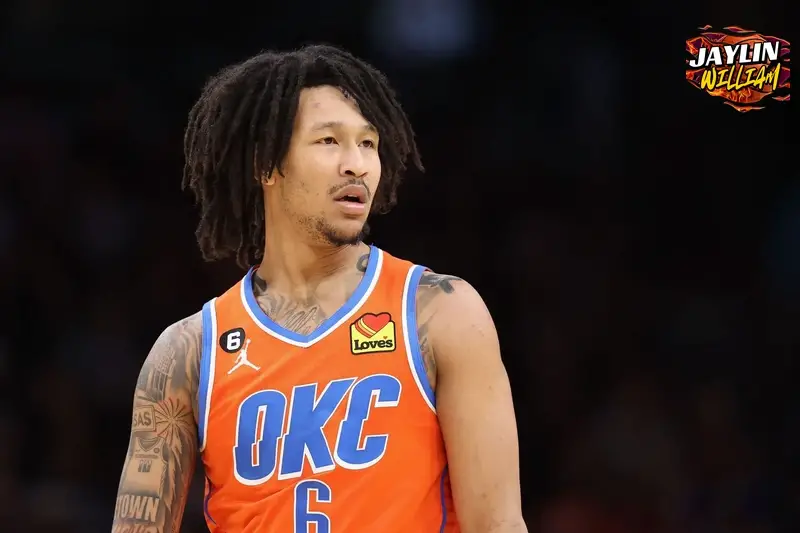
Jaylin Williams’ impact often transcends traditional statistics, making his intangible contributions immensely valuable to the Thunder’s success. He embodies the gritty, high-IQ role player every contender needs.
The Intangible Impact
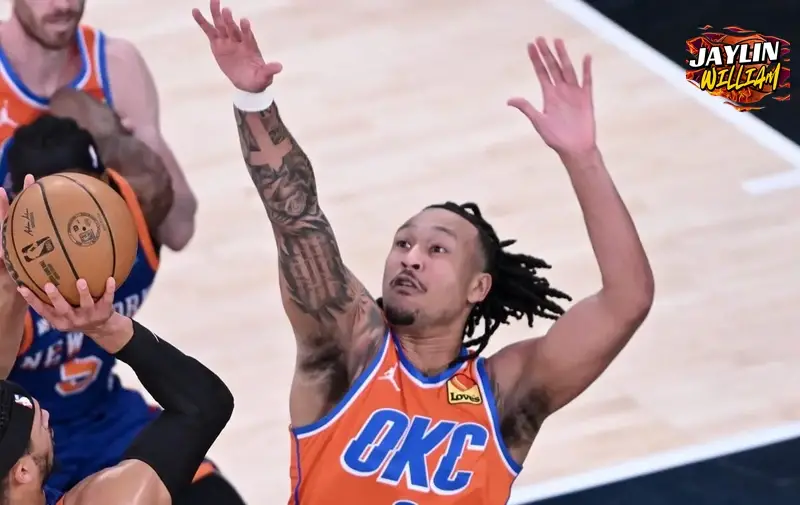
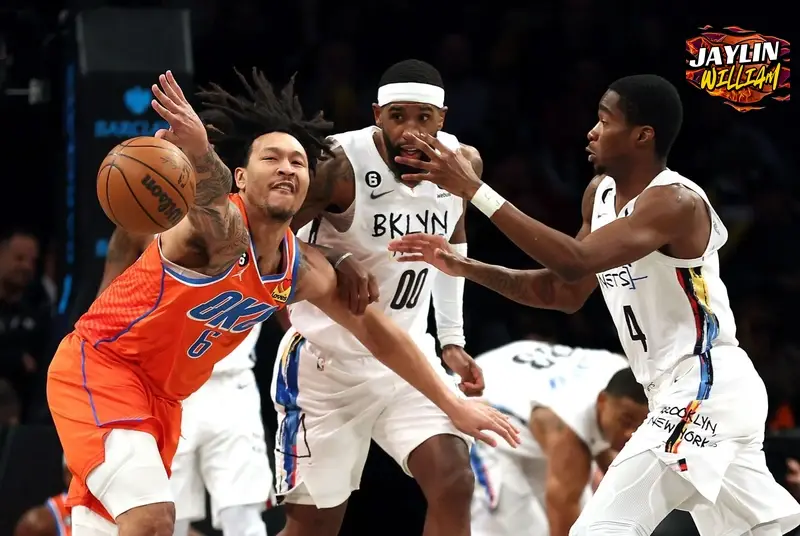
Williams has quickly established himself as one of the league’s preeminent charge-takers, a play that demonstrates immense selflessness and defensive IQ, disrupting offensive possessions and energizing his teammates. Beyond charges, he’s a highly effective screen-setter, crucial for liberating OKC’s perimeter-oriented offense. His ability to facilitate from the high post or on short rolls, making quick and intelligent passes, adds another layer to the Thunder’s offensive fluidity. On the boards, he is a physical presence, particularly on the offensive glass, generating crucial second-chance opportunities. Defensively, he’s a tenacious presence in the paint, often guarding bigger, stronger players, and displaying the courage and awareness to anchor rotations. His high basketball IQ is consistently on display, making the right read whether it’s setting a screen, making a pass, or anticipating a defensive rotation.
Statistical Progression and Potential
While his raw numbers might not jump off the page, Williams has shown consistent statistical progression over his young career. Crucially, his developing three-point shot is the swing skill that could elevate this contract from fair value to an undeniable steal. A reliable 35-38% shooter from deep would transform him into a legitimate five-out offensive threat, perfectly complementing Holmgren in the frontcourt and opening up driving lanes for SGA and Jalen Williams. His continued improvement in strength, defensive consistency, and all-around court awareness points to a high-ceiling role player who could become indispensable. He fits the timeline of OKC’s core and is clearly seen as a vital cog in their machine, not just a stop-gap.
Why It Leans Towards Advantageous
Considering all factors, the balance tips heavily towards this being a strategic steal for the Thunder, rooted in multiple financial and on-court advantages.
Cost-Controlled Asset
In a league where the average salary continues to trend upward, $8 million per year for a starting-caliber or high-usage rotation big man with Williams’ unique skill set and upside potential is incredibly reasonable. Many older, less versatile players command similar or higher salaries for less future value. This contract secures Williams as a cost-controlled asset for potentially three prime years of his career, providing invaluable salary cap stability as the Thunder navigate extensions for their current and future stars. It’s a proactive measure that saves the team millions down the line, freeing up resources for other critical roster additions.
Smart cap management and controlled assets like this one often headline Transfer & Contract, spotlighting the business intelligence behind roster construction.
Upside Buy-In
The Thunder aren’t just paying for current production; they are making a significant upside buy-in. If Williams continues to refine his three-point shot, improve his decision-making, and maintain his defensive intensity, his value will far outstrip this $8 million annual salary. Imagine a scenario where he becomes a consistent 36% three-point shooter who takes charges, passes well, and defends multiple positions — that player would realistically command $12-15+ million in today’s open market. OKC is betting on this future development at a discount, a calculated risk that is poised to pay massive dividends.
Avoiding Free Agency Premium
By extending Williams now, the Thunder ingeniously avoids the notorious free agency premium. Had Williams played out his rookie contract and hit the open market after another year or two of growth, teams with cap space, desperate for his blend of skills, could have pushed his annual salary significantly higher. This early extension locks him in before his market value potentially explodes, bypassing the competitive bidding process and securing him at a price that likely reflects his projected market value before further development. It’s a classic example of identifying value early and acting decisively.
The “Fair Value” Lens
While leaning towards a steal, it’s also important to acknowledge elements that make this deal a fair value proposition from a balanced perspective, particularly considering his current statistical output.
Current Production vs. Future Bet
From a purely “what he has done so far” standpoint, his statistical output (though impactful in areas not always reflected in traditional stats) would place $8 million as a perfectly fair value for a high-level rotational player with potential. It’s not an overpay given his current contributions, but also not a deep discount purely on past performance. It’s a measured future bet on his continued growth, rather than a retroactive reward for a superstar-level output. This ensures that the team isn’t handicapping itself with an exorbitant contract if his development unexpectedly stagnates.
Mitigating Risk
For both player and team, this contract mitigates risk. For Williams, he secures financial stability early in his career, preventing injury or a dip in performance from impacting his earning potential. For the Thunder, the contract is structured so that it’s not an albatross if Williams doesn’t reach his full potential. $8 million is a moveable contract in the NBA; it doesn’t severely restrict future financial flexibility like a $20+ million deal might. The length of the deal, likely three years, ensures that they have his services through a critical developmental phase without a decade-long commitment.
