
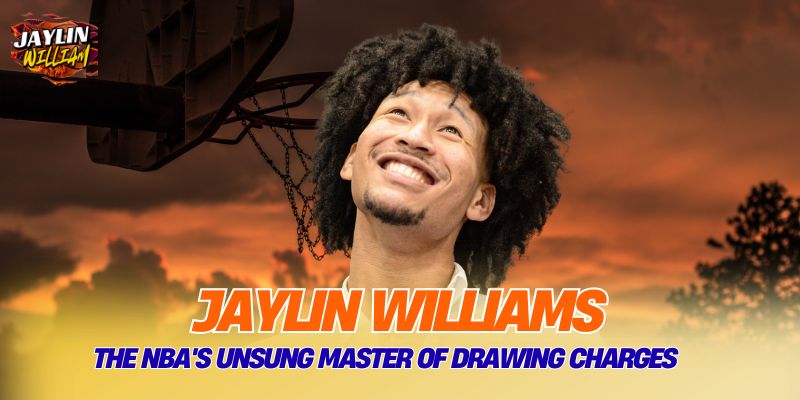
Scan the stat sheet for Jaylin Williams of the Oklahoma City Thunder and you won’t see explosive scoring averages or towering block totals. What does stand out, though, is his remarkable knack for drawing offensive fouls – taking the charge. That unglamorous, often-overlooked skill has become the defining element of his game, earning admiration from coaches, teammates, and opponents alike. This is the story of how “J-Will” turned the art of drawing charges from a hustle statistic into a true competitive weapon.
Master of the Art: How Williams Became a Charge-Drawing Specialist
Every specialist has a foundation. For Williams, it started long before the bright lights of the NBA.
Beginnings in Arkansas – a hint of what was to come
During his sophomore season with the Arkansas Razorbacks, Williams led all of NCAA Division I with 54 charges drawn – an astounding figure that revealed his instincts early. He already understood how to anticipate a drive, position his body, and commit to the hit. That willingness to sacrifice became his signature trait.
Transition to the NBA – adapting the craft
Drafted by the Thunder in 2022 (34th overall pick), Williams brought his charge-drawing skill to the professional stage. Early on he drew comparisons for his hustle, but rather than being a quirky stat, it grew into a sustainable element of his defensive repertoire.
Quantifying the impact – numbers don’t lie
Here’s a snapshot of his charge-drawing milestones:
*Approximate counts based on available data.
What stands out is not just the number, but the rate: at one point he drew a charge roughly every 21-22 minutes of play. That kind of frequency is rare in the modern NBA — a figure worth noting in the full breakdown available in our Stats & Highlights section.

Why Charges Matter – Beyond the Box Score
Drawing a charge might not generate a highlight dunk, but its importance to team defence and game flow is substantial.
Defensive mindset and paint protection
For the Thunder, last season’s strategy emphasised pace and transition, but also a unique way of protecting the paint: not always by blocking shots, but by inviting the contact. According to one analysis, Williams’ 43 charges drawn in his rookie season “accounted for more than 19 teams’ totals.” In other words, in one season he alone impacted the defensive turnover tally as much as entire rosters of many teams.
The psychological element – making drivers think twice
When an opponent sees Williams already set, ready and willing to fall, the calculus changes. They may hesitate, shoot a mid-range instead of attacking or choose a different path. As one profile noted: “When they’re driving at the basket and they see me down there, a lot of times … they won’t even drive at me or they’ll try to shoot a mid-range shot or a floater.”. This subtle deterrent effect elevates his value beyond pure counting stats.
Turnovers + momentum shift
A charge ends the possession entirely – no rebound for the offense, no second chance. That means not just one stop, but potentially a momentum swing. For a young team like OKC, gaining extra possessions and disrupting the opponent’s rhythm is gold.

Mechanics & Mindset – What Makes Williams Effective
Here we dig into the how and what of his technique and thought process.
Reading the floor and diving into the moment
The ability to draw a charge is half anticipation, half positioning and fully commitment. Williams demonstrates this by often being in optimal spots – anticipating the drive, stepping into it, locking his feet, absorbing contact and drawing the whistle. As one coach said: “It’s a mind game … and he’s mastered it.”
His size (6-10 or so) gives him enough presence, but it’s his timing and willingness to fall that seal the deal.
Risks and rewards – body-on-the-line
Taking charges is not glamorous. It means falling hard, hitting the floor, sometimes taking an inadvertent hit. Williams has admitted that his body takes a beating and he uses protective padding and therapy to recover. The reward, however, is forcing a turnover, ending a possession and boosting his team’s defensive floor.
Integration into team defence and role clarity
Williams doesn’t need to carry the scoring load. His value comes from the role-player archetype: setting screens, rotating, defending, drawing charges. When the offence needs a spark, fine; when the defence needs an edge, that’s where he shines. His coach and teammates recognize that clarity of role makes him more effective.
Challenges & Growth Areas
Even the best specialists face limitations, and Williams is no exception. Understanding those helps frame his path moving forward.
Minutes and opportunity
While the charge-drawing rate is impressive, it must be viewed in conjunction with his minutes and role. In 2023-24 he averaged only 13.0 minutes per game. Lower minutes mean fewer opportunities to draw charges. For him to expand impact, minutes must catch up with his defensive instincts.
Diversifying impact beyond the charge
If an opponent refuses to drive aggressively (to avoid the charge), will Williams still contribute defensive value through other means: rim protection, defensive rebounding, contesting shots? Some analyses flag this as the next stage of development.
Transition to bigger role, managing wear and tear
Body maintenance becomes key. If his charge-drawing role increases, he’ll face more collisions, more falls, more physical wear. Ensuring durability and maintaining energy when his minutes rise will be a growth challenge.
What It Means for OKC and Beyond
Here’s how Williams’ charge-drawing prowess ties into the broader scheme of his team and his career trajectory.
Fit in the Thunder ecosystem
The Thunder have positioned themselves as a young, energetic, hustle-driven team. Williams’ specialty in drawing charges aligns perfectly with that identity. It gives them an edge in transition defence and helps stabilize rotations. His value may not always show in “points per game” but in “turnovers forced per minute”-a metric increasingly appreciated by teams.
Career value and niche mastery
In an NBA where many players chase two-way or multi-dimensional roles, there is still strong value in being elite in one specific skill area – what one could call “niche mastery”. Williams’ charge-drawing may become his niche anchor. If he can expand his defensive repertoire while retaining that skill, his value increases significantly.
Legacy potential and coaching currency
One day when young players are taught the craft of taking a charge, Williams could be referenced as a modern example. He may not headline All-Star lists, but coaches love players who sacrifice, who take hits, who change possessions. That kind of currency ensures longevity and respect in locker rooms.

Conclusion
In a league built on highlights – dunks, deep threes, and chase-down blocks – Jaylin Williams has turned an unheralded act into an art form. Each time he sets his feet, braces for contact, and crashes to the floor, he reminds the basketball world that defense is as much about courage as it is about numbers. His charge-drawing skill has become both a calling card and a career foundation. For the Thunder, it strengthens their defensive core; for Williams, it offers longevity and purpose.
As opponents adapt, so will he – refining the craft, anticipating new challenges, and continuing to prove that effort, intelligence, and sacrifice still matter in a game obsessed with flair. Because when the scoreboard flips and an opponent’s possession ends in a whistle instead of a layup, one truth remains:
Jaylin Williams made the difference.
